How to Avoid “Nightmare Layovers” in Business-Class Itineraries
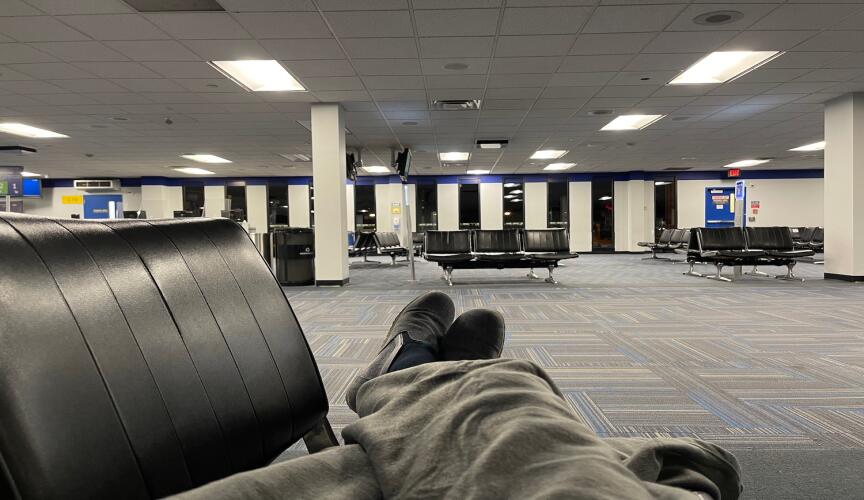
A “nightmare layover” isn’t one giant meltdown. It’s the accumulation of predictable little nuisances: a connection time that’s “almost legal”, an airline monopoly hub with insane terminal changes, unpredictable immigration/security lines, sneaky transit-visa requirements, or other minor-but-frequent events that cascade into disaster if your connection is also the last flight of the day.
Most of them can be anticipated ahead of time, though. Below is your cheat sheet for booking business-class itineraries that stay realistic (and affordable) no matter what happens.
Criteria That Make a Layover “Nightmare” (and Why Business Class Isn’t Always the Silver Bullet)
Flying business class doesn’t guarantee a stress-free connection. Layovers go wrong when:
- Your connection time is too tight (even if “legal” by airline standards)
- You’re not on a single ticket (turning a delay into an expensive/self-funded rebook)
- You need to traverse an airport monster (50+ minute walks/run, inter-terminal trains, re-clear security)
- You’ve been baited into an overnight or last-flight connection with nowhere to go if you miss it
- You need to clear immigration during the connection (perhaps unexpectedly)
- Or some obscure transit/custom rule comes into play because of your layover choice/toolbox for stress-free layovers
Avoid needless headaches: buy flights that have cushions where connections tend to break down.
Step 1: Pick “Safe Connection Times,” Not Minimums
Every airport publishes their minimum connection times (MCT). Basically MCT’s are what the airport thinks is possible under ideal conditions. They’re not realistic buffers.
Instead use these “safe connection times” for business class trips:
- Domestic to domestic (same terminal): 75-90 mins
- Domestic to international: 2+ hours
- International to domestic (arrive clear immigration/customs): 2.5-3.5 hours
- International to international (change terminals): 2-3 hours
- Connection at a known huge hub? (ie. Dubai, Singapore, Tokyo, etc.): +30-60 minutes
- Connection requires train/bus or re-clearing security: +45-90 mins
Yes, flights that require tighter connections will often be (much) cheaper.
Travel trick: sometimes increasing your connection time doesn’t cost a dime. Because flight schedules sometimes line up nicely, you can often add time to your layover by simply shifting your flight earlier or later by one departure. When comparing flights, sort by total risk instead of price.
Step 2: Treat “Last Flight of the Day” Itineraries Like Hostile Terrain
If your connection is the last flight of the day, or one of only a couple flights, that’s a red flag.
Before booking, ask yourself:
- Is my onward flight the last flight of the day to my destination?
- How many alternative flights leave later that day?
- Is there at least 1 other flight on the same airline/partner if I’m misconnected?
If you answer “no” to any of the above, apply a healthy dose of skepticism. And add connection time to cushion, or find an alternative route.
Step 3: Treat Immigration/Security/Terminal Changes Like Land Mines
Most itinerary fails occur between when you land at your connection and board your next flight. Here are the main culprits.
Unexpected “in-between” events that happen during layovers:
- You must clear immigration at your connecting city. (Typically only happens when entering a country/regional airspace, or unique routing.)
- You must collect and re-check bags. (More common on separate tickets/bizarre interline situations.)
- You arrive in one terminal, leave from another. (Meaning you must re-clear security.)
If any of the above apply, it’s almost always worth buying more connection time.
Risk mitigation tricks:
- When possible, choose itinerary that allow you to connect and stay “airside” (no immigration hassles in the middle)
- Same terminal connections are best. Don’t hesitate to pay more for your ticket if it means avoiding a terminal change.
- If you must change terminals, build serious padding. Hotel-level signage at airports sucks when your flight is delayed or you’re lost and exhausted.
Step 4: Beware DIY Itinerary “Discounts”
Want to save money? Roll your own itinerary.
Combining separate tickets to make a custom business-class itinerary is common. Known in the industry as “self-transfers”.
This works great most of the time. But can easily turn into a nightmare when:
- Your first flight is late (your second airline is under no obligation to help you)
- You need to enter the country, collect bags, and re-check
- You lose lounge access for the “messy middle” of your trip
- You wind up stranded paying exorbitant premiums for last-minute business seats / downgraded to economy
If you still want to create separate tickets, here’s the rule of thumb:
- Puff your connection time to 4–6 hours. Overnight is often best
- If possible, travel carry-on only
- Think of separate tickets as “high risk / high reward”. If the reward isn’t significant, it’s rarely worth it
Step 5: Overnight Layovers Should Be Intentional (or Avoided)
Overnight layovers aren’t always bad, but only when you want them to be.
Question “overnight” layovers when:
- You arrive late evening and leave before breakfast (read: no sleep)
- The airport doesn’t have hotels / transfer services at night
- Your connection city has restrictive transit rules
Embrace overnight layovers if:
- You’re using the layover as an intentional stopover. (To save money, rest, reduce fatigue, etc.)
- You book a hotel within 10–15min of the terminal
- You land with plenty of time to eat, shower, sleep, etc.
Rule of thumb: if you have an overnight layover make sure you have a full 10–12 hours in the airport (so you can actually sleep at night).
Step 6: Check Transit/Visa Rules before Buying Your Ticket
Surprisingly specific. In some countries you may be allowed to remain airside all trip, but hit a wall if you need to leave the terminal, get bags, or overnight.
Ask yourself before booking a risky itinerary:
- Do you need a transit visa for layover country?
- Will you be able to stay airside the entire time?
- Does your itinerary force you to enter the country (due to terminal changes)?
- Are you arriving late at night when immigration staff / counters may be limited?
Transit rules are especially important to consider for overnight layovers.
Step 7: Protect Your Itinerary with the “Delay Domino Effect”
Delays are rarely random. If you get delayed, it’s probably going to ripple across your entire itinerary.
Best way to protect yourself? Don’t choose itineraries where the first leg:
- Flies late in the day (limiting recovery options)
- Is a route with single daily frequency
- Is the last flight of the day for crew/bus/some other reason.
When choosing between similar flights, the safer option is usually the one that has more flexibility earliest in your itinerary.
Step 8: Pack as if Murphy’s Law Applies to Your Travels
Ok, this one should go without saying. But since we’re being thorough:
Must pack for every business-class layover:
- A change of clothes. Pajamas aren’t required but recommend
- Toiletries
- Chargers and at least one portable battery
- Prescriptions and any critical medication
- Snacks
- Pen. Yes they still make you fill out paper forms in airports
Even on business class long-hauls, checked luggage can get left behind. Packing for 24-hour independence is just good crisis planning.
Step 9: If All Else Fails, Know What Questions to Ask
Say your connection does go wrong, but you booked a “protected itinerary”. The airline will likely book you on the next available flight to your final destination. They may also provide meals, hotel rooms, and ground transportation depending on timing, airline, and country.
If you’re flying in Europe (or subject to European laws) you may be entitled to additional assistance as well as “right to care” or compensation.
Smart questions to ask at the desk:
- “What’s the next flight to my destination today?”
- “What’s the next partner flight I can be booked on?”
- “If I need to stay overnight, can you book a hotel and transfer?”
- “What’s this going to cost? Can I have a receipt?”
They likely won’t give you receipts for food/hotel/transport if you pay out of pocket, but always ask and try to keep those too.
Bonus: How TravelBusinessClass.com Makes Your Itineraries Less Stressful
Nobody wants bad connections. But when booking complicated routings, you’re basically gambling with certainty.
Travel Business Class reduces that uncertainty by:
- Highlighting itineraries that meet our “reasonable connection time” standards.
- Filtering out itineraries with unrealistic connections, risky routings, late-night arrivals, or dodgy terminal changes.
- Advocating for routes/solutions that help you keep your valuable business-class seat, hotel stay as well as overall travel experience intact.
Long story short: we weed out the junk so you don’t have to.
Business Class Travel Doesn’t Have to Stress You Out
When you take the time to plan for uncertainties your business travel will only improve. Flight prices won’t always be this low, so if you haven’t tried business class before now is the time.
Dream of biz class? Explore our blog to get the best tips on business class travel.
Ready to start booking business-class flights? Join the 250,000 families who fly with TravelBusinessClass.com.